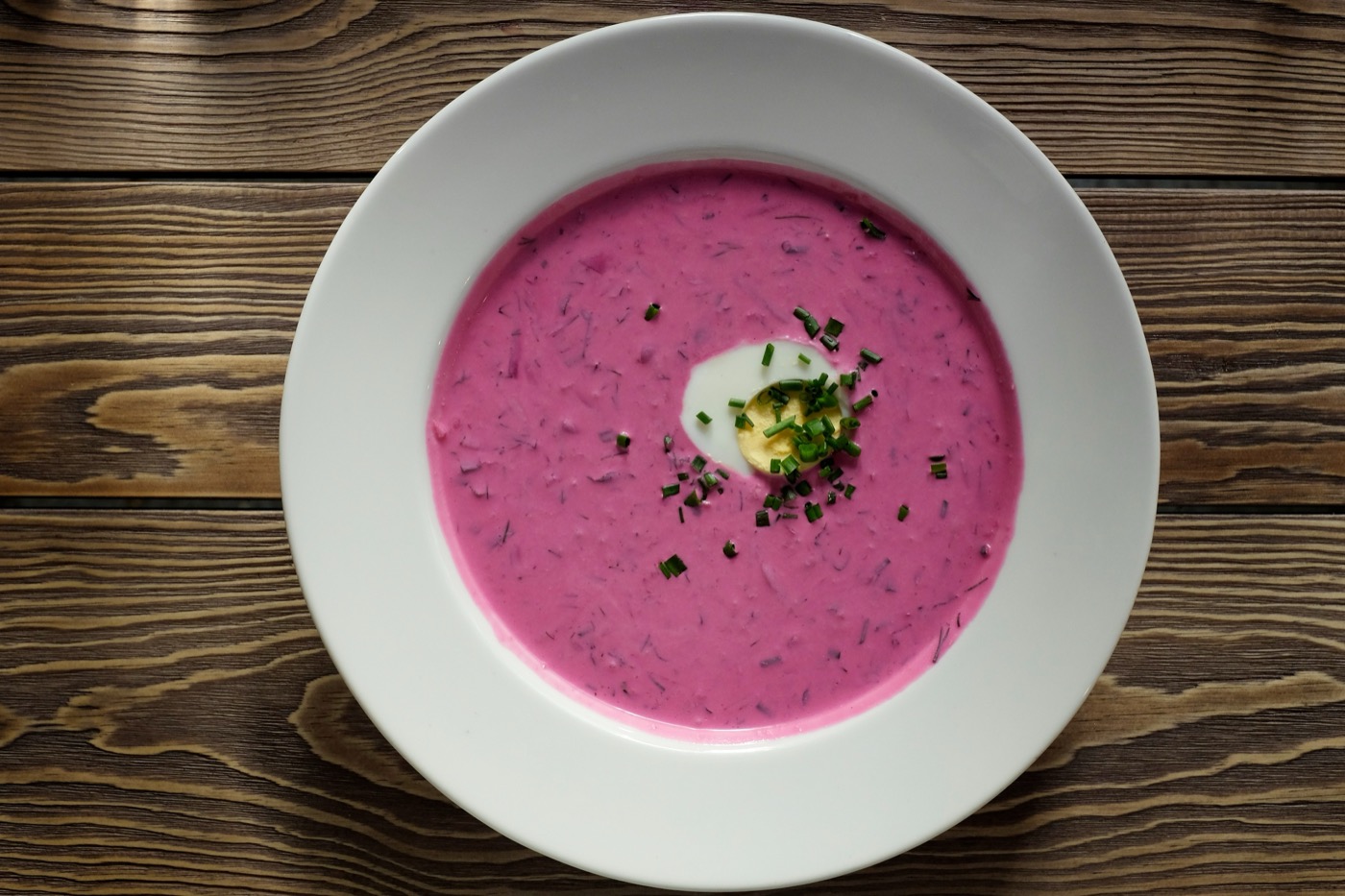
Cold beet borscht
Grate cooked beets and cucumber into kefir or buttermilk. Add dill, scallions, salt, and a boiled egg. Chill well.
Photo: Dmitry Dzema, CC BY-SA 4.0.
A small atlas of borscht
Some borschts simmer for hours. Some are chilled, bright, and ready in twenty minutes. Each version records a season, a pantry, and a place.
Grate cooked beets and cucumber into kefir or buttermilk. Add dill, scallions, salt, and a boiled egg. Chill well.
Photo: Dmitry Dzema, CC BY-SA 4.0.
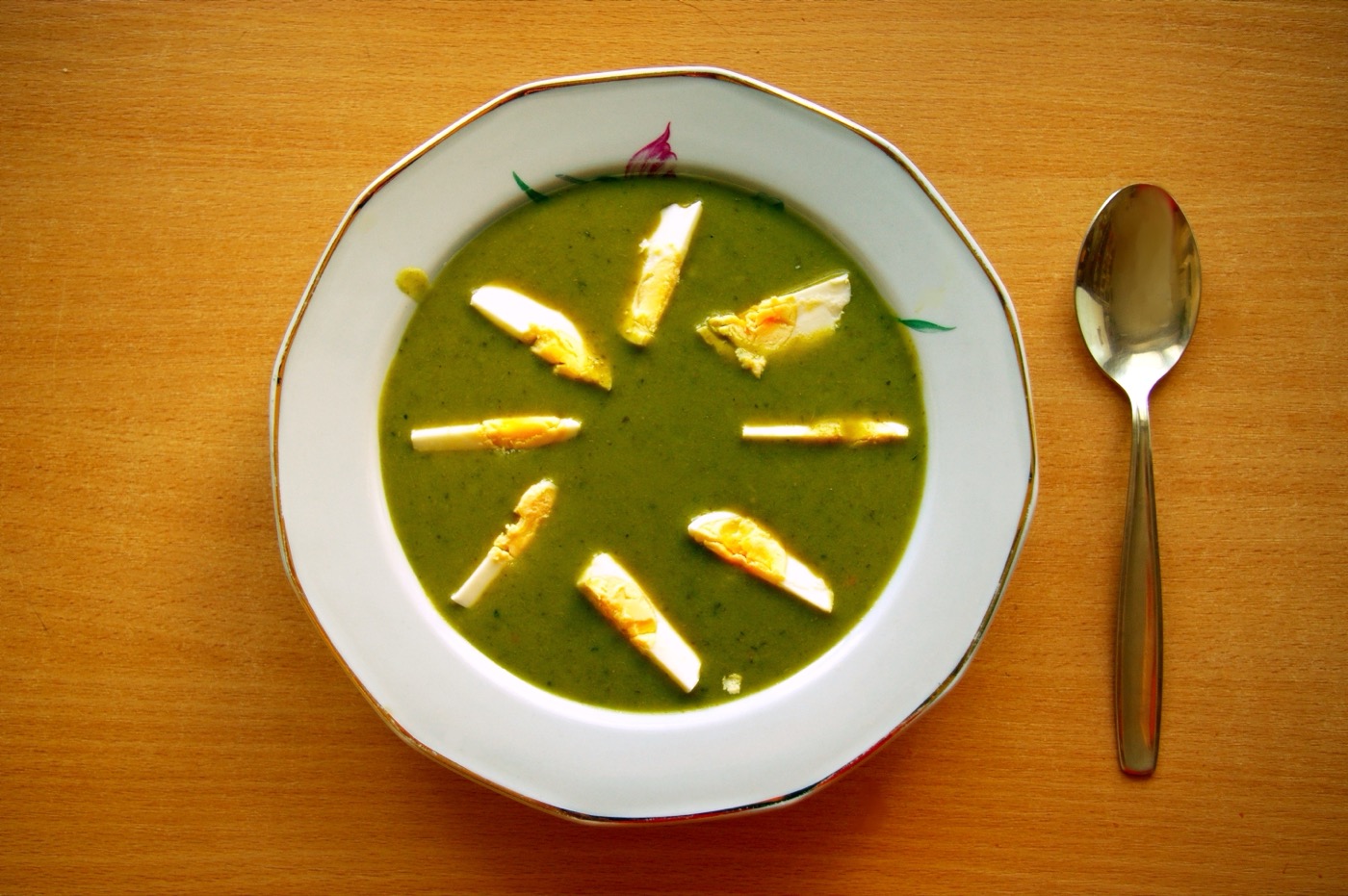
Build a light broth with potato and onion, then add generous handfuls of sorrel near the end. Finish with egg and sour cream.
Photo: Michał Sulik, CC BY 3.0.
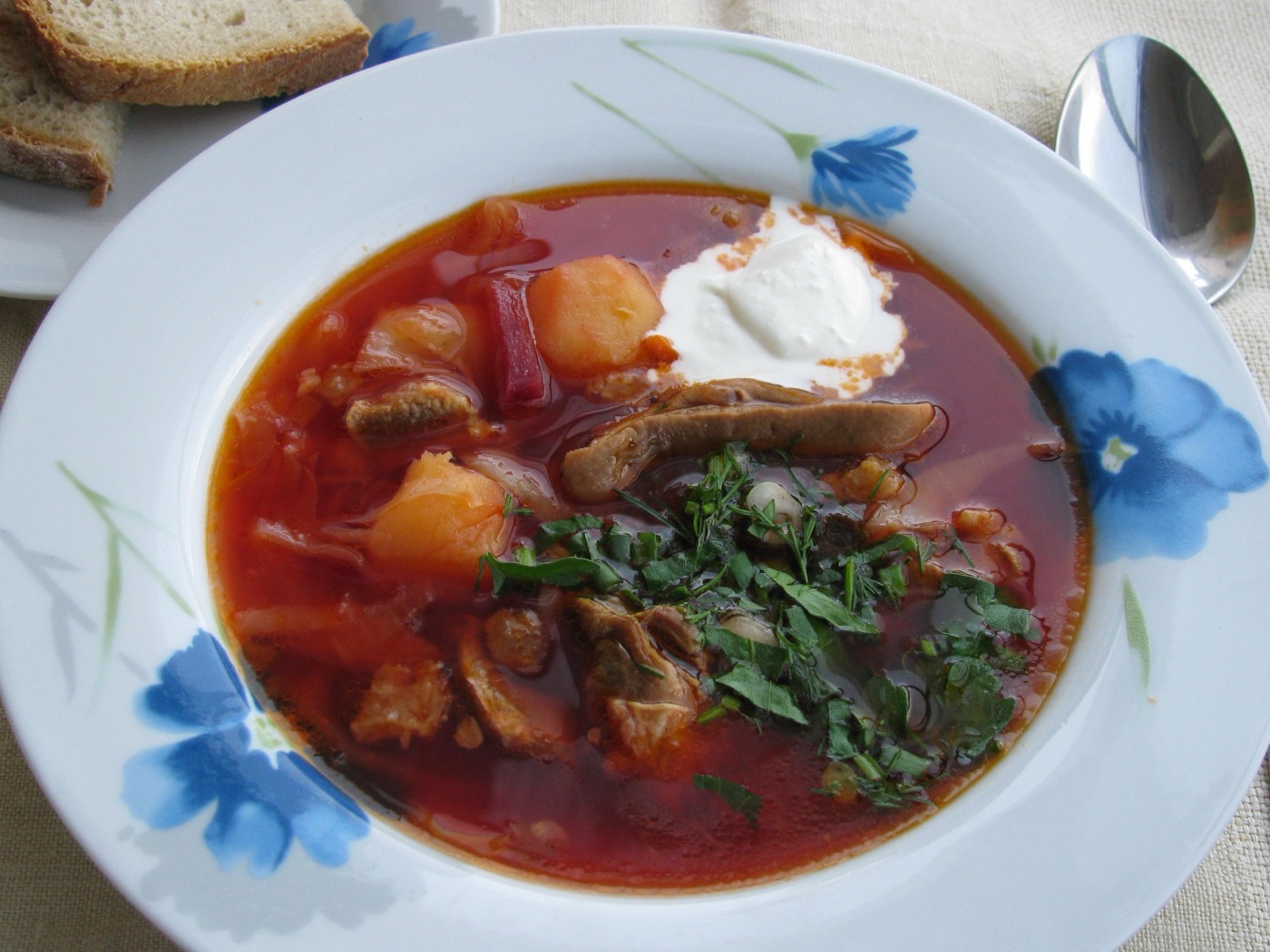
Use dried porcini in the stock, add cabbage and beets, and keep the pot meat-free. Fermented beet liquid brings extra depth.
Photo: Kagor, CC BY-SA 3.0.
Another branch
In Polish traditions, żurek and white barszcz can be sour, pale soups made with fermented rye or roots. Names overlap; ingredients tell the story.
Cook’s note
Regional recipes are not failed versions of one master recipe. They are records of climate, pantry, season, and taste.


